 Universe Today
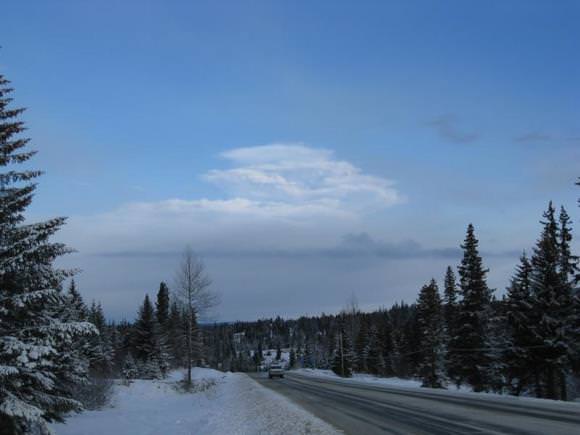
Alaska's Mount Redoubt erupted twice Thursday morning, creating a 12-mile-high cloud of ash. The Alaska Volcano Observatory reported the first eruption came about 8:30 a.m., sending an ash cloud more than 9,100 meters (30,000) feet in the air. A second eruption came about an hour later, and blasted ash 20,000 meters (65,000 feet) high. After the second eruption, mud flows called lahars near the base of the volcano ran into the nearby Drift River. The National Weather Service also issued a flash flood warning for regions surrounding the Drift River, as eruptions can cause snow and ice to melt, causing the river to swell with melt water. The ash is predicted to drift as far as Anchorage, which lies about 160 km (100 miles) northeast of the volcano.
The volcano erupted with five smaller blasts on Monday, but had been relatively quiet for the past two days. Since the earlier eruptions occurred during the night, satellite images were not available during the peak times of eruptions, but scientists are hoping satellites were able to capture the latest eruptions in action.
Airlines have canceled flights around the area, as ash poses a significant threat to aircraft engines. Some regions surrounding Mount Redoubt have been evacuated.
Geologists with the U.S. Geological Survey have said a lot of snow and ice remains on the mountain, increasing the danger from mud flows that already have downed hundreds of trees and carved a huge gouge out of a glacier.
AVO, NASA Earth Observatory, Yahoo News