 Universe Today
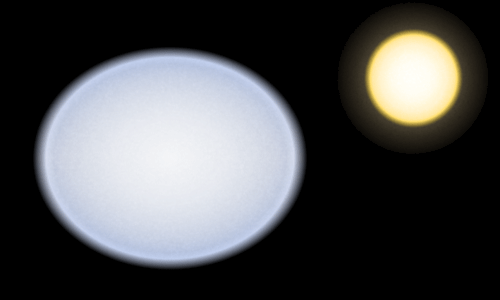
Astronomers have developed a star classification system to organize all the stars we can see in the Universe; it's based on color and the spectral signature of certain elements in the star's atmosphere. The classifications are: O, B, A, F, G, K, M (here's a handy mnemonic , "Oh be a fine girl, kiss me".) A stars are some of the more common stars seen with the unaided eye: they appear white or bluish-white.
The surface temperatures of A stars range from 7,400 Kelvin to 10,000 Kelvin; that's about twice the temperature of the Sun, so these stars are really hot. Astronomers also recognize them by the strong hydrogen lines, as well as lines of ionized metals, like Iron, Magnesium and Silicon. A stars are more massive than the Sun, but don't lead lives that are too much different than the life of our own Sun.
Some familiar A stars include Vega, Sirius, and Deneb.
We have written many articles about stars here on Universe Today. Here's an article about how Vega has a cool, dark equator, and it might even have planets.
If you'd like more information on stars, check out Hubblesite's News Releases about Stars, and here's the stars and galaxies homepage.
We have recorded several episodes of Astronomy Cast about stars. Here are two that you might find helpful: Episode 12: Where Do Baby Stars Come From, and Episode 13: Where Do Stars Go When they Die?